This is one of the most florid and complicated prokeimenon melodies in the prostopinije tradition. But for reasons you’ll see, this will probably be one of the shortest and simplest entries in the Chant Works series on the Eight Tones melodies for the Divine Liturgy.
The Tone 7 prokeimenon and Alleluia in the 1906 Prostopinije
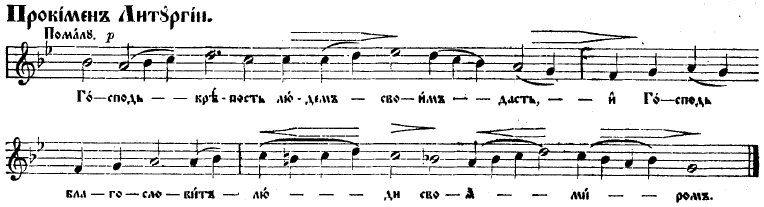
Here is the Sunday prokeimenon in Tone 7 from the 1906 Tserkovnoje Prostopinije or “Church Plain Chant” of Bokšai and Malinič:
And here is the Alleluia:

Each has three parts, but there is a bit of a mismatch; the Alleluia leaves out of the “middle” part of the prokeimenon and divides the first part into two. But they are very recognizably the same melody!
The Tone 7 prokeimenon and Alleluia in English
At this point, you will probably NOT be surprised that the first official English settings of the Tone 7 prokeimenon and Alleluia substantially shortened their melodies; you can find them here.
Here they are in the 2006 Divine Liturgies book:


Not only are these recognizably the same melodies as the Slavonic, but the prokeimenon melody can be used to sing a very wide range of texts without forcing.
You can see and listen to all the Tone 7 prokeimena in the Divine Liturgies book here: Tone 7 prokeimena examples.
The prokeimenon of the Ascension
As you look through the prokeimenon at the above link, one stands out as being noticeably different; it is the Tone 7 prokeimenon for the Ascension of the Lord. Here is the official English version; it is sung at several points in the Divine Liturgy of this feast.

This particular prokeimenon has its own special setting in the 1906 Prostopinije, at the bottom of page 93 in the section of music for the Ascension. So here the English follows that variant melody.