Each prokeimenon melody in the prostopinije (Carpathian plain chant) tradition is different, but Tone 6 is a little more different than the others.
The Tone 6 prokeimenon and Alleluia in the 1906 Prostopinije
Here is the Sunday prokeimenon in Tone 6 from the 1906 Tserkovnoje Prostopinije or “Church Plain Chant” of Bokšai and Malinič:
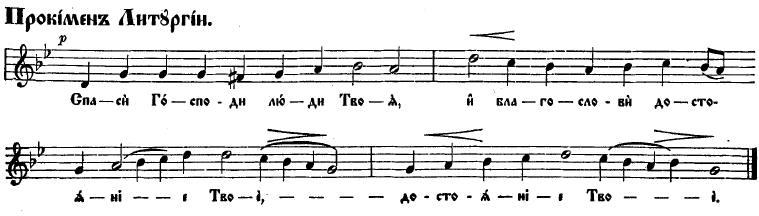
If you’ve attended services in the prostopinije tradition, MOST of that melody should sound familiar. But the last part of the first line to the first note of the second may sound a bit different. That is because most English texts are shorter than the corresponding Slavonic originals, and for Tone 6 prokeimena in English we tend to use the Alleluia version of this melody for that middle portion.
Here is the Alleluia in Tone 6 from the Tserkovnoje Prostopinije:

We will consider at the Alleluia first, then move on to the prokeimenon.
The Tone 6 Alleluia in English
Here is the first official setting of the Tone 6 Alleluia in English, from the 1970 collection Byzantine Liturgical Chant:

Clearly, the Slavonic original has been cut down a bit, and some of the “turns” of the melody removed. These were largely restored in the 2006 Divine Liturgies book:

Except for a couple of syllable shifts, the melody is the same as the Slavonic.
The Tone 6 prokeimenon in English
Here is the first official setting of the Tone 6 Sunday prokeimenon English, from the 1970 collection Byzantine Liturgical Chant:
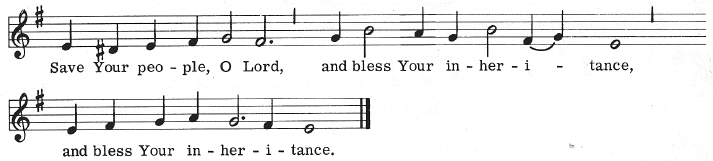
Because of the way “unneeded” notes have been dropped out, it sounds a good bit different from the Alleluia. Here is the corresponding prokeimenon in the Divine Liturgies book:

Here the resemblance to the Alleluia is restored. We see the same melody in the prokeimenon for the departed, which is very familiar to our people. Here is the version in the Divine Liturgies book:

You can see (and listen to) all the Tone 6 prokeimena in the Divine Liturgies book here.
Chanting the psalm verse
If you’ve listened to any of the recordings above, you may have noticed that the psalm verse is sung a bit differently than in the other tone. It uses the minor psalm tone:

This is partly because the Tone 6 prokeimenon leans heavily on the minor scale (based on la), but also because if we chant the verse to the usual psalm tone with a prokeimenon in Tone 6:

there there is a fierce jump from the end of the psalm tone (do) down a sixth to mi. By using the minor psalm tone, instead:

we start the psalm verse on the same pitch that ended the prokeimenon, and from the end of the psalm verse to the repeat of the prokeimenon is a much easier leap download of a perfect fourth.
Listen to the recordings above to hear some examples if you’re not clear on how this works! You CAN use the usual psalm tone – the psalm verse is a solo after all – but this way is a lot easier.